
Mystic Industrial Tour

Hand-colored lithograph, View of Mystic River & Mystic Bridge, Conn., Bailey & Hazen, Boston, MA, 1879; Library of Congress
Industrial History Mystic Walking/Driving Tour
Welcome to Industrial Mystic! While Mystic is best known today as a tourist must-see, plenty of industrial history lies just beneath the surface. Mystic made its mark as a leading 19th C. wooden shipbuilding center, a well-documented story. This tour focuses on some of the less-well-known manufacturing enterprises, large and small, that arose during and after the shipbuilding era. The following map shows the numbered sites.
NOTE: The tour begins on the east (Town of Stonington) side moving north to south; then crosses the Mystic River to the west (Town of Groton) side. The wide distribution of the sites requires some driving in addition to walking.
Sites
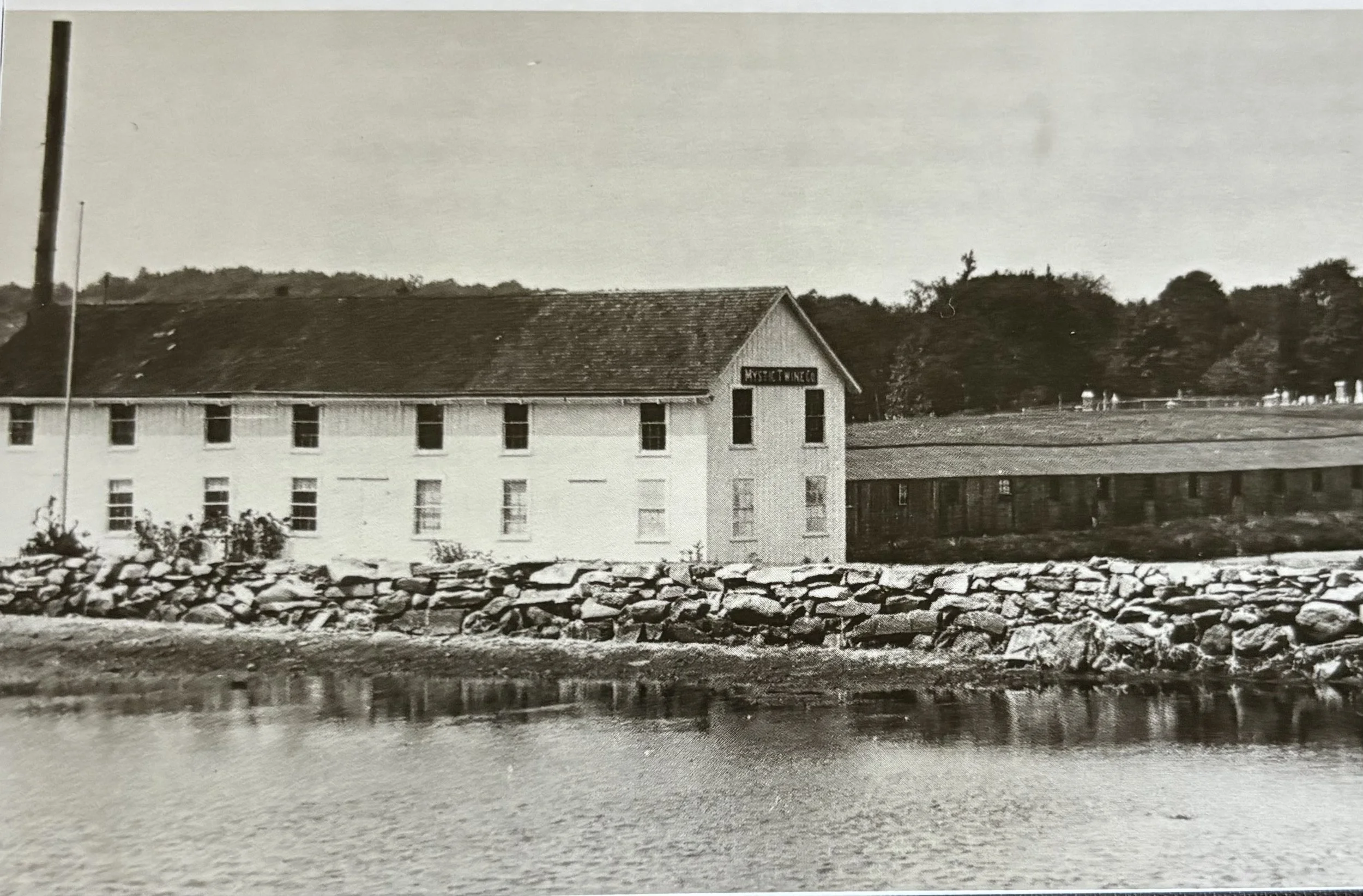
(1) Mystic Twine Company - established 1883
135-145 Greenmanville Avenue
Light rope, twine, and fishing nets; now seasonal food spots.
Beginning in the 18th C. Mystic had a series of ropewalks producing cordage for sailing vessels. For over a decade Mystic Twine met the needs of the region’s fishing fleets for light rope and netting. The site is now occupied by the Sea View Snack Bar and Twisters Ice Cream. - Image below courtesy of William N. Peterson
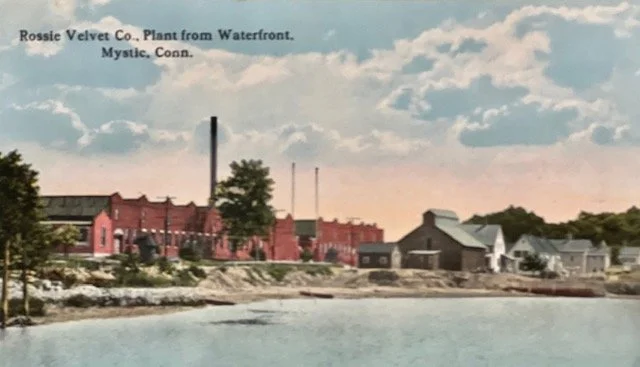
(2) Rossie Velvet Company - established 1898
112 Greenmanville Avenue
Velvet 1898-1958; radios and televisions 1940s-1950s; now houses Mystic Seaport Museum storage, small craft gallery, G.W. Blunt White Library and Research Center.
Established by German mill owners in 1898 the facility was a major local employer, including many skilled German immigrants on its rolls. Confiscated during World War I, the mill continued to produce velvet under various owners until 1958. In the 1940s and early 1950s the Templetone Radio Mfg. Co. produced military radios and later early televisions in leased space. - Image below courtesy of William N. Peterson.
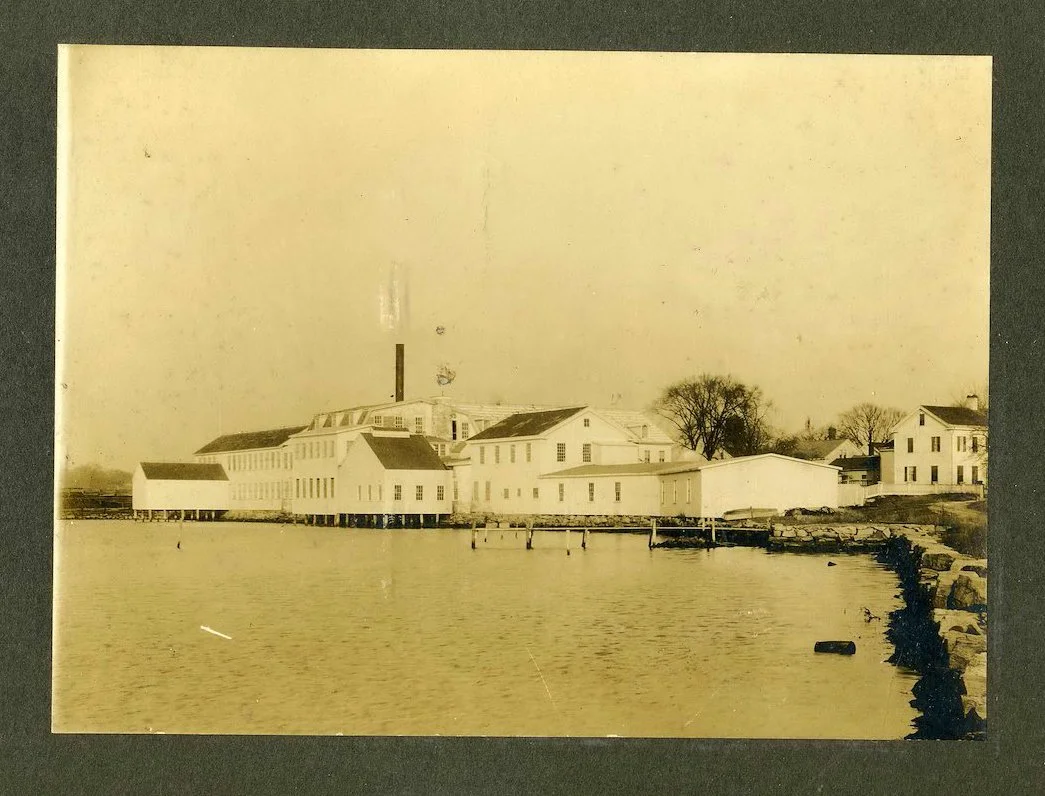
(3) Greenman Mfg. Co./Mystic Mfg. Co. - established 1849
75 Greenmanville Avenue
Various cotton textile products; now Mystic Seaport Museum’s Stillman Exhibition Building.
The major shipbuilding firm of George Greenman & Co. diversified into textiles by 1850, ultimately constructing a large complex on the Mystic River waterfront. Reorganized and renamed Mystic Mfg. Co., it operated into the 1920s. Today the surviving brick portion of the complex bears the name of Charles Stillman, one of the founders of Mystic Seaport Museum. - Image below courtesy of Mystic River Historical Society
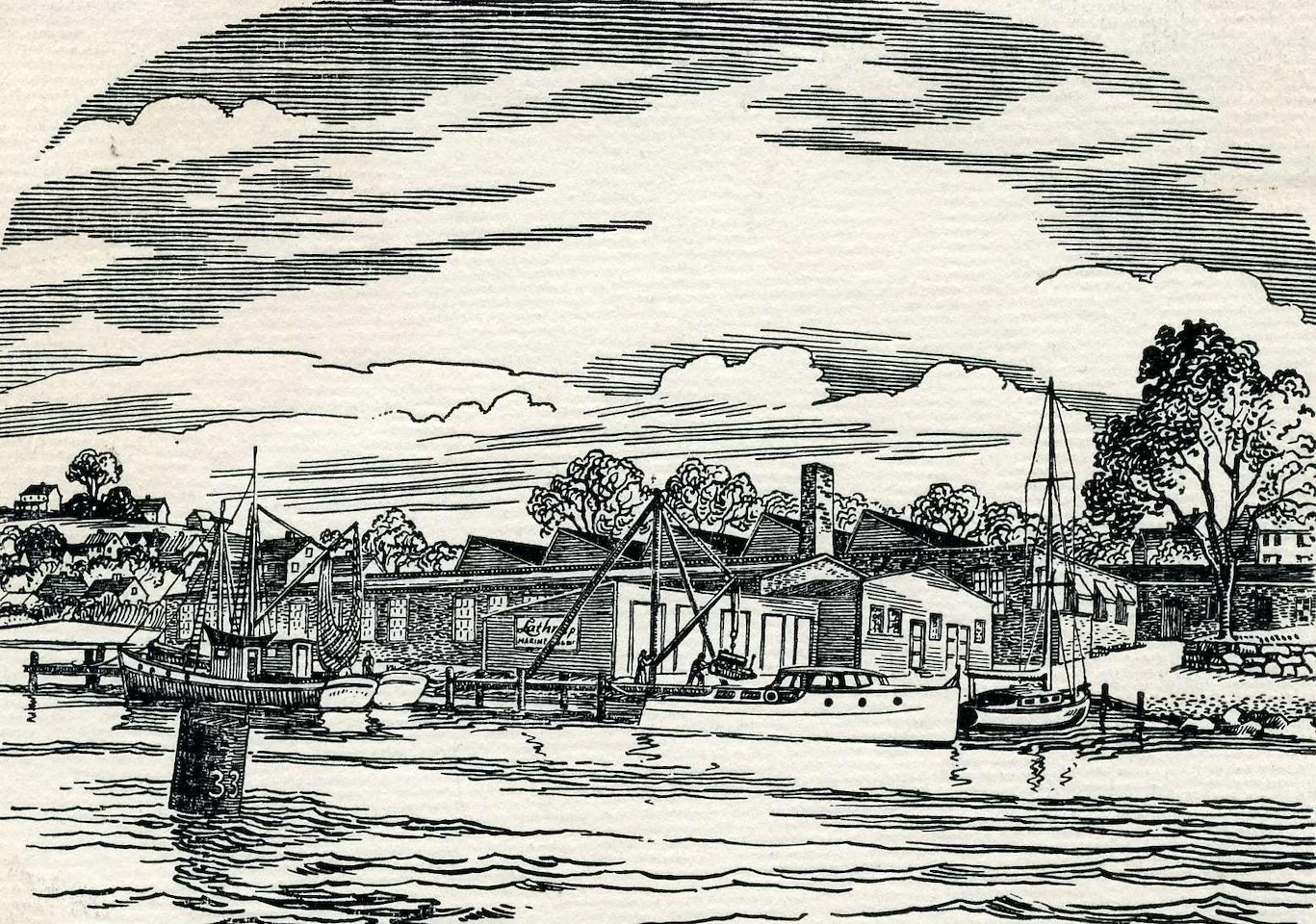
(4) Lathrop Engine Co. - established 1898
14-16 Holmes Street
Small marine engines,1898-1960s; now a restaurant.
Mechanical engineer James W. Lathrop initially came to Mystic to work at the Mystic Twine Co., but ultimately made a career in designing and building small marine engines as J. W. Lathrop & Co. The firm supplied both civilian markets and the military (especially USCG) and in 1954 was purchased by Danish engine maker Burmeister & Wain. Production ceased about 1964. The Engine Room restaurant occupies part of the plant. - Image below courtesy of Mystic River Historical Society.
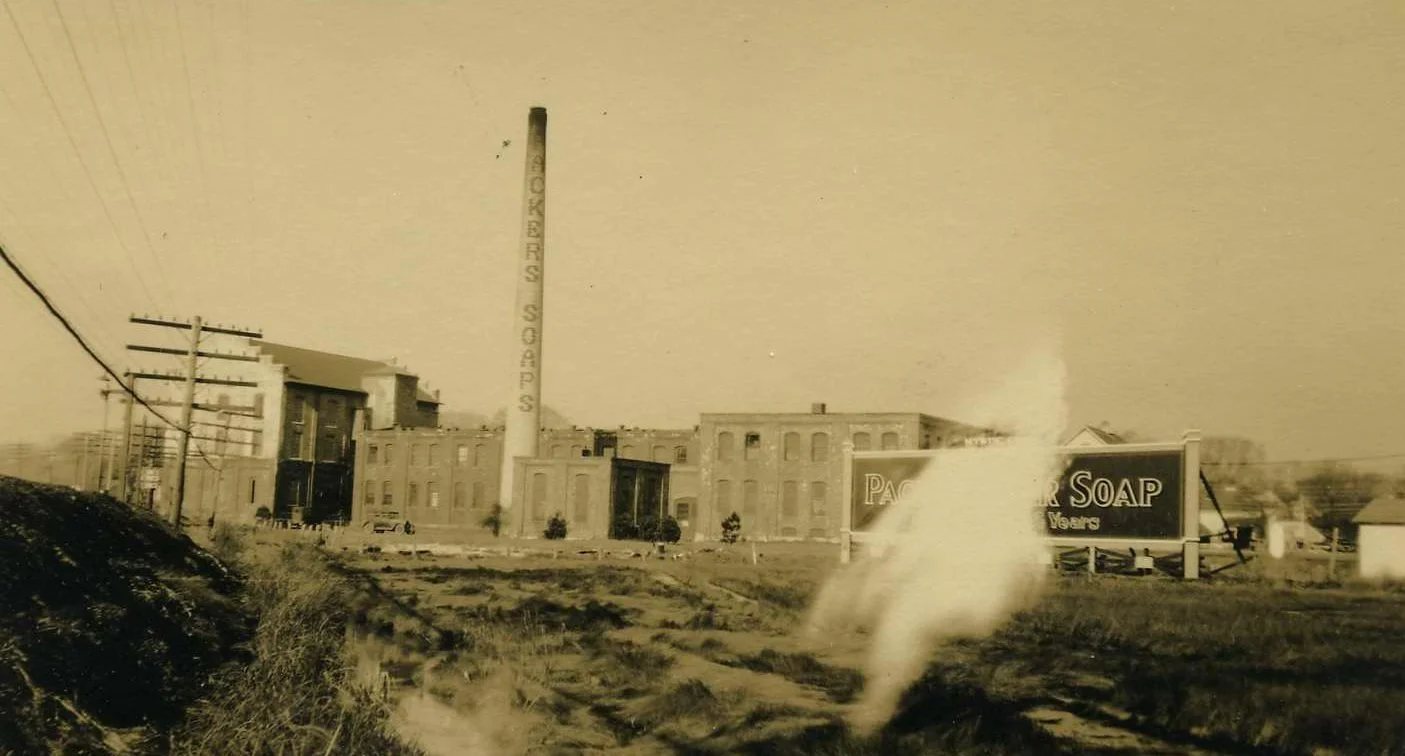
(5) Packer’s Tar Soap Co. - established 1869
12 Roosevelt Avenue
Soap manufactory 1869-1965; now mixed office/retail.
Mystic native Daniel Packer developed a soap with a pine tar base and began almost a century of manufacturing a large line if pine tar products. Operations at the Mystic plant ended after the firm was sold, though these soaps continued to be manufactured elsewhere in the U.S. - Image below courtesy of Mystic River Historical Society.
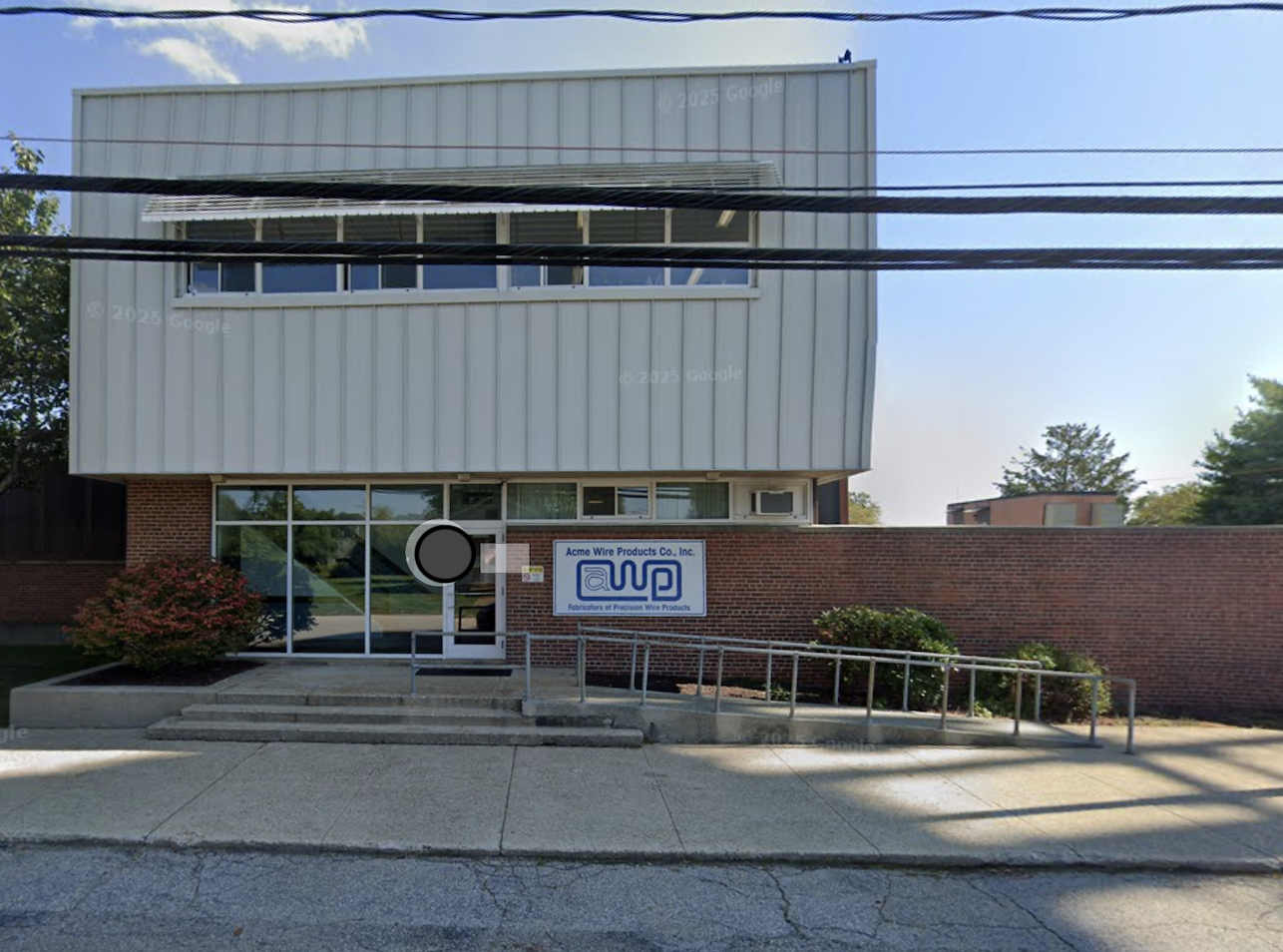
(6) Acme Wire Products - established 1970
7 Broadway Extension
Wire products fabricator
Founded in Norwich in 1970, in 1979 Acme Wire Products moved operations into a 75,000 square foot plant.
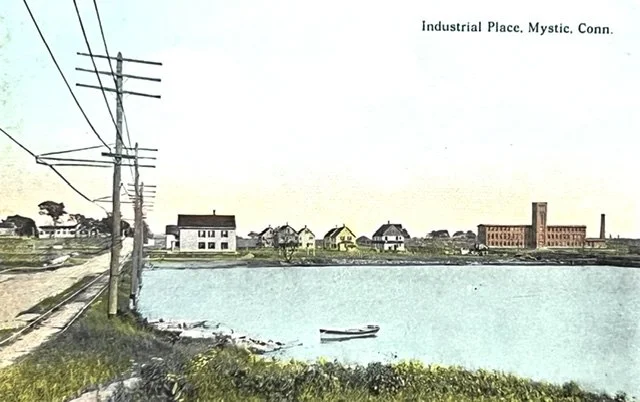
(7) Durham Duplex Razor Co. - established 1908
1 Harry Austin Drive
Razor manufacturing; now YMCA /recreational site
Durham Duplex Razor Co. of Sheffield, England and Jersey City, NJ manufactured razors of all types. It merged with the locally-owned Enders Razor Co. in the 1940s. The brick factory had previously been a textile mill. Manufacturing ended about 1970 and today the site is occupied by a YMCA and town recreational fields. - Image below courtesy of William N. Peterson.
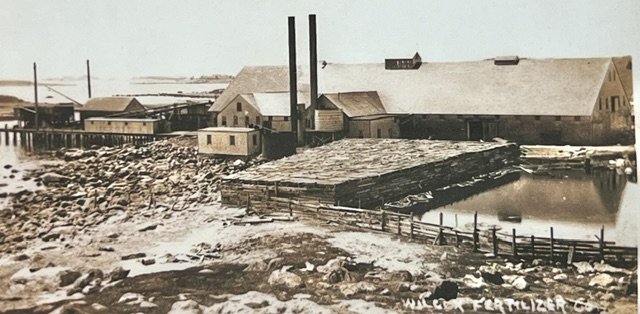
(8) Wilcox Fertilizer Co. - established c. 1870s
43-55 East Shore Road, Latimer Point
Menhaden fertilizer and chemical plant; now residential.
Menhaden, a migratory coastal fish, played a vital role in the area’s economy, supporting a small fleet of sailing, and later steam, vessels. Menhaden were taken by the millions and processed into fish oil for industrial uses, as well as fertilizer (“fish guano”). The Wilcox plant was one of several locally that operated from the mid-19th century into the 1920s and 1930s. - Image below courtesy of William N. Peterson.
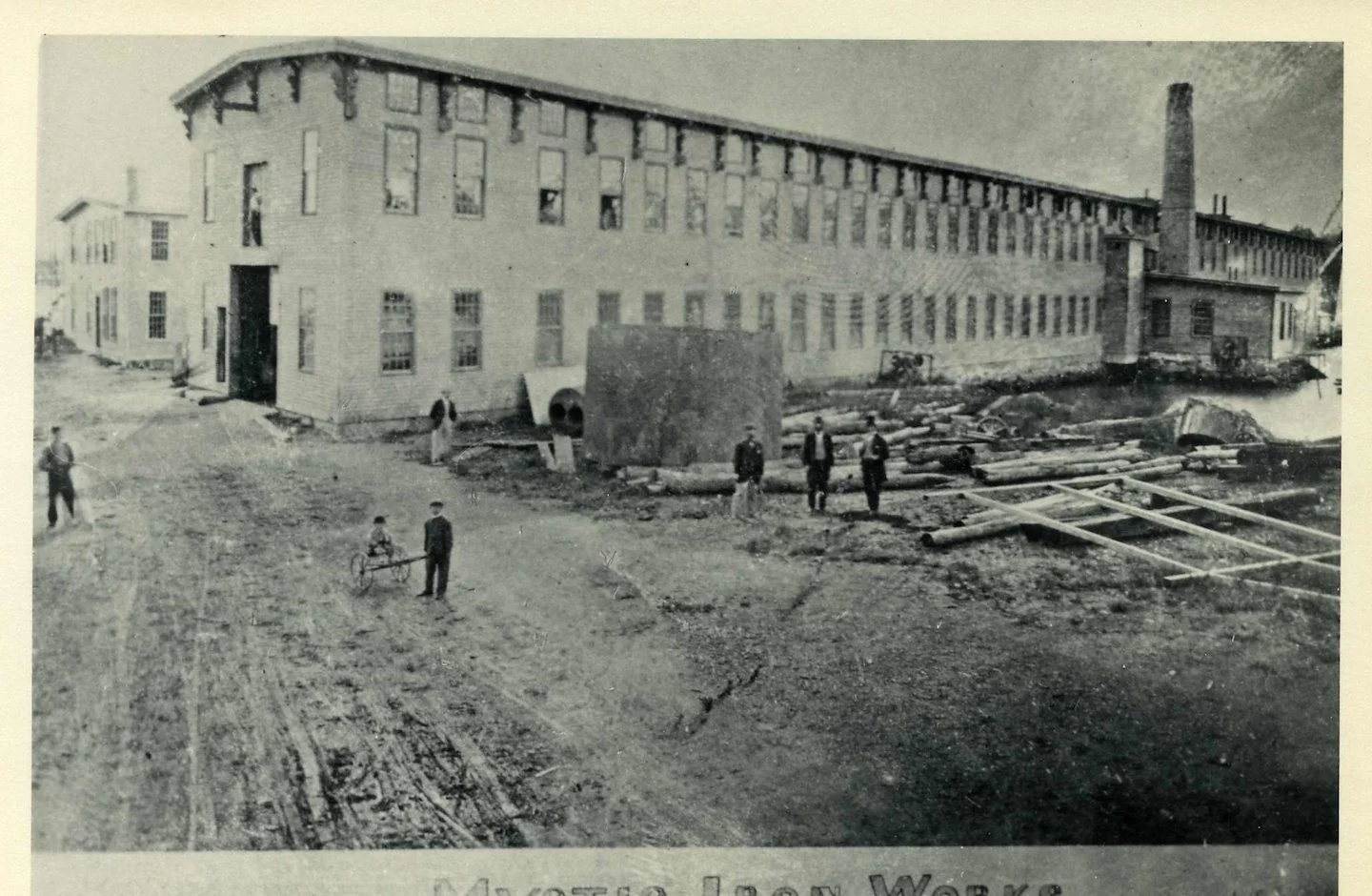
(9) Mystic Iron Works/Oceanic Woolen Co. - established 1862
2 Washington Street
Marine engine and boiler maker; woolen mill; now boatyard and marina.
As more steam-powered vessels were built in Mystic, the iron works was established to produce the boilers and engines. Tall shear legs, used to hoist the heavy machinery into new steamers, stood at the end of the wharf and were a prominent part of the waterfront. The upper floor of this massive masonry structure housed a woolen mill. A massive 1875 fire completely destroyed both businesses. Seaport Marine, which suffered its own catastrophic fire in 2022, occupies the site. - Image below courtesy of Mystic River Historical Society.
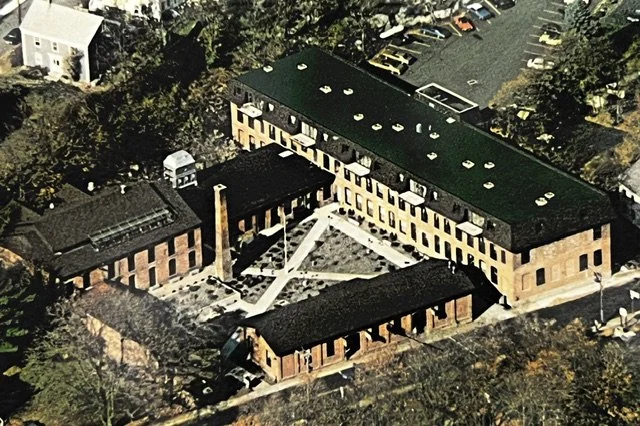
(10) Reliance Machine Co. /Standard Machinery Co. - established 1848
12 Water Street
Agricultural and marine machinery; printing presses and paper cutters; now mixed development
Reliance Machine produced cotton gins and other agricultural equipment, largely for southern buyers. The outbreak of war in 1861 closed this market and the firm retooled for production of marine boilers and engines. In 1866 the business was succeeded by Standard Machinery, best known for producing printing presses, paper cutters and, later, drill bit chucks. Today the site, known as “Factory Square”, features office, restaurant, retail and housing. - Image below courtesy of William N. Peterson.
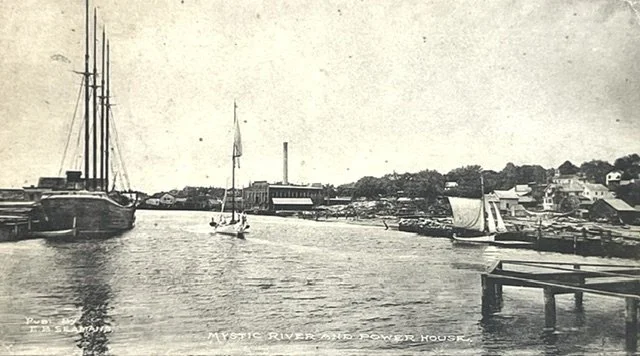
(11) Groton & Stonington Street Rwy. Co. Powerhouse - built 1904
15-1/2 Water Street
Electric power generating plant; now condominium complex
Linking its namesake towns, the G&SSR Co. was an interurban trolley system in operation 1904-1928. Power for the system was generated at this riverfront coal-fired plant, with a smokestack that towered over the riverfront. Coal arrived by barge or schooner and was directly unloaded at the site. The powerhouse and adjacent car barn have been converted to condominiums and its tall smokestack removed. - Image below courtesy of William N. Peterson.
Further Reading:
Anderson, Virginia B., Maritime Mystic. Mystic: Marine Historical Association, 1962.
Connecticut Historical and Industrial. New York: W. S. Webb & Co., 1884.
Leading Businessmen of Mystic. Hartford: Mercantile Publishing Co., 1889.
Peterson, William N., Mystic Built: Ships and Shipyards of the Mystic River, Connecticut, (2nd Ed.). Mystic: Mystic Seaport Museum, 2021.